

Research
Smart Wound Dressing incorporating Dye-based Sensors
Chronic wound healing disorders affect an estimated 2.7 million patients in Germany alone, placing a significant burden on both patients and the healthcare system. The SWODDYS project addresses this challenge by developing the scientific foundations for a new generation of intelligent wound dressings capable of continuously monitoring the physiological status of acute and chronic wounds at the individual patient level.
The dressing integrates fluorescent dye-based sensors to measure key wound microenvironment parameters, oxygen partial pressure (pO₂) and pH, in real time and non-invasively. These multimodal sensor signals provide a window into the energy-metabolic processes underlying tissue repair and wound healing progression. A core aspect of the project is the fusion of this continuous sensor data with visual wound information, enabling a comprehensive, multimodal understanding of wound status that goes beyond what either modality can provide alone.
The Chair of Machine Learning in Medicine contributes the machine learning and computer vision components of the project. This encompasses wound classification, wound segmentation, and wound tissue segmentation from clinical images, providing structured visual assessments of wound state. These visual representations are further leveraged for healing trajectory prediction through longitudinal visual understanding of wound progression. Alongside this, multimodal fusion methods are developed to integrate sensor-derived physiological signals with image-based features, supporting more robust and individualized models of the wound healing process.
The project is carried out in collaboration with PreSens, the University Hospital Regensburg, and the Machine Learning and Data Analytics (MaD) Lab at Friedrich-Alexander-Universität Erlangen-Nürnberg (FAU, Department AIBE). SWODDYS is funded by the Bayerische Forschungsstiftung.
Diabetes Management
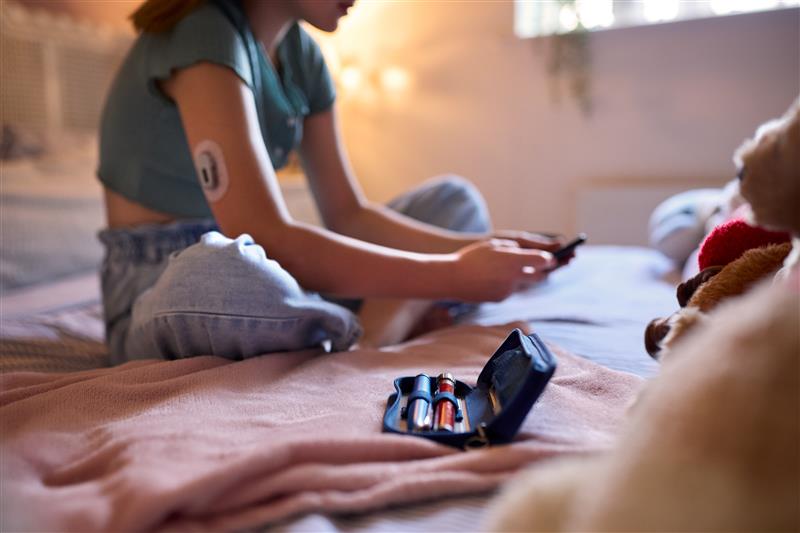
Children and adolescents with type 1 diabetes face a daily challenge: Maintaining stable blood glucose levels while managing the unpredictable effects of physical activity, stress, and growth. Despite advances in therapy, hypoglycemia remains the most common and most feared acute complication for these young patients and their families.
A major driver of this risk is daytime exercise, which has immediate and delayed glucose-lowering effects that vary widely depending on the type, duration, and intensity of the activity. Therefore, providing personalized treatment recommendations to the individual child remains a major clinical challenge.
Our research goals in this field are to improve blood glucose forecasting and nocturnal hypoglycemia prediction by specifically considering the physiological data of children and the effects of their daily routines. To overcome the limitations of standard continuous glucose monitoring, our research uses multimodal time series data. By applying advanced machine learning algorithms to these multivariate data streams, we aim to accurately forecast blood glucose dynamics, predict nocturnal hypoglycemia, and explore broader physiological patterns, such as deriving sleep phases and quantifying stress responses.
Our current work focuses on data from the recently completed DIAMonitor study. In this study, a comprehensive set of multimodal data, including continuous glucose levels, diverse physiological parameters, activity tracking, and dietary habits, was continuously recorded from young patients in their everyday home environment. We use these real-world insights to train our predictive models and better understand individual metabolic patterns.
This project is conducted in cooperation with Universitäts-Kinderspital beider Basel and ETH Zürich (Research group: Medical Data Science).